
Acting is a craft that requires dedication, consistent practice, and ongoing education. For aspiring actors and seasoned performers alike, professional acting training offers an invaluable opportunity to refine their abilities and expand their skill set. Comprehensive programs are designed to meet the diverse needs of actors by focusing on foundational techniques, advanced methods, and personal growth.
Benefits of Professional Acting Training
- Personalized Feedback: Instructors offer individualized critiques to help performers identify strengths and address areas for improvement.
- Access to Industry Experts: Many programs feature guest instructors or workshops led by casting directors, producers, or established actors.
- Networking Opportunities: Students collaborate with peers and professionals who can provide support or connections in the competitive entertainment industry.
- Improvement in Versatility: Training often covers multiple acting styles (e.g., classical theater, film acting, improvisation), ensuring versatility in various performance settings.
Key Areas Covered in Professional Acting Classes
| Area of Focus | Description |
|---|---|
| Voice & Speech Training | Enhances vocal clarity, projection, and modulation for stage or screen work. |
| Movement & Body Awareness | Develops physical expression through exercises like Alexander Technique or yoga. |
| Character Development | Teaches methods to create layered, believable characters through analysis. |
| Scene Study | Focuses on interpreting scripts and understanding dynamics between characters. |
| Improvisation Techniques | Builds spontaneity and adaptability in unscripted situations. |
How Professional Training Enhances Performance
- Refining Emotional Depth: Actors engage in exercises that deepen their ability to access a range of emotions.
- Experimenting with Styles: Exposure to varied performance techniques—such as Stanislavski’s method or Meisner’s exercises—enables actors to discover what resonates with them.
- Strengthening Focus: Practice improves concentration onstage or during complex scenes while maintaining authenticity.
- Elevating Confidence: Repetition within a supportive environment helps build self-assurance during auditions or live performances.
Tips for Choosing an Acting Program
- Reputation: Look into reviews from alumni or testimonials about the program’s quality.
- Curriculum: Ensure it aligns with your specific interests (e.g., on-camera work vs theater).
- Class Size: Smaller class sizes often allow for more personalized attention from instructors.
- Location & Schedule: Determine whether it fits into your routine and career aspirations.
Investing time in comprehensive professional acting training not only hones technical skills but also cultivates the confidence required to thrive in an ever-evolving industry atmosphere.
Discover the Best NYC Acting Classes to Build a Strong Foundation in Acting Skills
For aspiring actors, building a strong foundation in acting techniques and skills is essential for long-term success. A solid groundwork provides the tools needed to tackle diverse roles, adapt to various acting styles, and deliver compelling performances. Professional acting classes are the ideal environment to acquire these foundational elements.
Core Acting Techniques
- Stanislavski Method: Focuses on realism, emotional truth, and connecting deeply with the character’s motivations and experiences.
- Meisner Technique: Emphasizes emotional spontaneity and living “truthfully under imaginary circumstances.”
- Method Acting (Lee Strasberg): Builds on Stanislavski’s work by promoting emotional memory to achieve authenticity.
- Chekhov Technique: Centers on physical actions to unlock psychological connections in a performance.
Understanding these methods allows actors to remain versatile and confident when approaching different styles of storytelling.
Key Skills Every Actor Should Develop
- Mastering articulation for clear delivery.
- Understanding tone variation for emotional impact.
-
Learning proper breathing techniques to enhance projection.
- Controlling posture and movement on stage or screen.
-
Using gestures effectively to convey unspoken emotions.
- Thinking quickly under pressure.
-
Responding naturally during unscripted moments or auditions.
- Familiarity with methods like chunking scripts into sections or creating associations for line recall.
Importance of Repetition and Practice
Consistency is fundamental when building an acting foundation. Actors benefit from regular practice through structured exercises such as monologues, scene work with partners, or cold readings during class sessions.
| Type of Activity | Purpose | Frequency |
|---|---|---|
| Voice Warm-Ups | Improve clarity and vocal range | Daily |
| Character Development Exercises | Explore backstory creation & motivations | Weekly |
| Partnered Scene Work | Build chemistry with other performers | Weekly or Bi-weekly |
| Improvisation Sessions | Boost creativity & adaptability | Weekly |
These consistent habits help sharpen technical abilities while reinforcing confidence.
Seeking Feedback Regularly
Feedback from instructors or peers plays a crucial role in refining your craft. Constructive criticism promotes self-awareness regarding areas where improvement is needed while allowing you to celebrate progress.
Some ways feedback is commonly incorporated include: – Recording performances for later review. – Participating in classroom critiques. – Collaborating one-on-one with mentors who provide targeted advice.
A well-rounded foundation enables actors not only to meet industry demands but also empowers them with the confidence required for personal artistic growth throughout their careers.
Master Emotional Range with Acting Classes New York Offers
An actor’s ability to portray genuine emotions is at the core of compelling storytelling. Developing emotional range allows performers to authentically connect with their characters and, in turn, resonate deeply with an audience. This skill is not innate for everyone; it requires ongoing practice, introspection, and the application of specific techniques.
Why Emotional Range Matters
- Audience Connection: The authenticity of an actor’s emotions creates a meaningful bond between the performer and the viewer. Without believable emotional depth, characters can feel flat or unrelatable.
- Character Believability: A wide emotional range helps actors inhabit roles more convincingly, regardless of the genre or medium.
- Versatility in Roles: Actors with developed emotional range can transition seamlessly between various character types and narratives.
Techniques for Expanding Emotional Range
- Tap into personal experiences to evoke real emotions during a performance.
- Reflect on moments from your own life that are parallel to your character’s situation.
-
Be mindful not to over-rely on personal memories to avoid emotional burnout.
- Engage in unscripted scenarios that prompt you to react spontaneously.
-
Use improvisation to explore how your character might respond emotionally in unfamiliar situations.
- Cultivate awareness of your own emotional responses through regular meditation.
-
Practice grounding techniques to stay present during intense scenes.
- Study how humans express emotion through gestures, posture, and movement.
-
Work with movement coaches or participate in workshops focused on physical storytelling.
- Experiment with vocal variations—tone, pitch, volume—to convey nuanced emotions.
- Practice reading scripts aloud while identifying ways voice inflection supports mood shifts.
Exercises for Emotional Growth
| Exercise Name | Purpose | Time Required |
|---|---|---|
| Mirror Work | Observe and replicate facial expressions that align with different emotions. | 10-15 minutes daily |
| Emotion Journaling | Document personal feelings during everyday events to enhance self-awareness. | 15-20 minutes daily |
| Monologue Variations | Perform the same monologue using contrasting emotional tones (e.g., joy vs sadness). | 20 minutes per session |
| Group Scene Practice | Collaborate with peers on emotionally charged scenes for feedback and growth. | Varies based on scene |
Avoiding Overwhelm While Expanding Emotional Range
- Take breaks between highly intense exercises or roles that demand prolonged displays of negative emotions.
- Consider working with a coach or therapist if certain themes feel too overwhelming emotionally.
- Balance heavy material with lighter creative projects or activities outside acting.
By cultivating their ability to embody a wide spectrum of human emotion genuinely, actors establish themselves as versatile professionals who bring depth and realism to every role they undertake—whether on stage or screen. Investing time into developing this skill will ultimately elevate not only individual performances but also career longevity as an artist in the competitive world of acting.
Master Emotional Range at New York Acting Schools for Authentic Performances
One of the most critical aspects of becoming a successful actor is the ability to convey genuine emotions that resonate with an audience. Developing emotional range is essential for delivering authentic performances in both stage and screen acting. Professional acting classes provide structured techniques, exercises, and guidance to help actors explore and expand their emotional depth.
Why Emotional Range Matters
Emotional range allows an actor to:
– Portray diverse characters: Each role demands different emotional responses, from joy and love to anger and despair.
– Connect with audiences: Genuine emotional expression helps build empathy between the actor and the viewer.
– Bring depth to performances: A character becomes more layered and real when emotions are portrayed authentically and believably.
Without a developed emotional range, performances may feel flat or unconvincing, hindering an actor’s ability to fully inhabit their role.
Techniques for Expanding Emotional Range
- Actors draw on personal memories to access specific emotions.
-
This technique helps bridge the gap between real-life feelings and on-stage expressions.
- Encourages spontaneous reactions in emotionally charged scenarios.
-
Develops quick thinking while staying true to a character’s emotions.
- Helps regulate physical responses during emotionally intense scenes.
-
Promotes relaxation and focus, enabling better control over emotional expression.
- Working in front of a mirror allows actors to observe how their facial expressions translate into specific emotions.
-
This builds awareness of subtle physical cues that enhance authenticity.
- Helps actors become more attuned to their own emotional states.
- Encourages self-reflection, which can be applied when building complex characters.
Common Challenges Actors Face with Emotional Range
| Challenge | Solution |
|---|---|
| Feeling “blocked” or unable to access certain emotions | Work closely with acting coaches who can offer tailored exercises |
| Fear of vulnerability | Create a safe environment in acting class where risks are encouraged |
| Overacting or exaggerating | Focus on subtlety through detailed observation of real-life interactions |
Benefits of Strong Emotional Range
Actors who invest time into building their emotional range experience numerous benefits:
– Greater versatility when auditioning for roles across genres (comedy, drama, etc.).
– Increased confidence in handling high-stakes scenes or complex storylines.
– The ability to create memorable performances that leave lasting impressions on audiences.
By committing yourself fully to exploring your own emotions within professional training settings, you’ll be better equipped not only to portray realistic characters but also engage with your craft at a deeper level.
Mastering Scene Study and Character Analysis in Acting Classes NYC
Scene study and character analysis are critical components of professional acting, enabling performers to delve deeper into their craft and deliver compelling, authentic performances. These skills provide actors with the tools to understand their characters, connect emotionally with the narrative, and bring stories to life on stage or screen. Below is a closer look at how mastering these techniques can elevate an actor’s performance.
The Importance of Scene Study
- Understanding Context: By examining the scene’s relationship to the overall story, actors can better situate their performance within the narrative arc.
- Identifying Objectives: Scene study helps actors determine what their character wants (the objective) in any given moment.
- Exploring Subtext: Beyond the dialogue, scenes often carry unspoken emotions or themes that an actor must identify and convey.
- Polishing Interactions: Working on scenes with other actors allows performers to develop chemistry and strengthen their ability to react authentically.
Steps for Effective Scene Study
- Read Thoroughly: Start by reading the entire play or script multiple times to fully understand its themes, tone, and pacing.
- Analyze Your Role: Focus on your character’s motivations, relationships, and emotional journey throughout the story.
- Break Down Beats: Divide the scene into “beats” — smaller sections defined by shifts in tone or objectives — to better capture nuances.
- Work Collaboratively: Rehearse with a director or fellow cast members to refine timing and emotional delivery.
In-Depth Character Analysis
Character analysis goes hand-in-hand with scene study by allowing actors to explore who their character truly is on a deeper level. This involves uncovering personal history, inner conflicts, desires, fears, and relationships that shape behavior.
Key Elements of Character Analysis
| Element | Description |
|---|---|
| Backstory | Understand your character’s history before entering the world of the play/film. |
| Relationships | Analyze how your character interacts with others throughout the narrative. |
| Goals | Identify short-term (scene-specific) and long-term (overarching) objectives. |
| Emotional Triggers | Recognize moments that cause significant emotional responses in your character. |
Practical Exercises for Character Development
- Journaling as Your Character: Write journal entries from your character’s perspective to deepen understanding of their thoughts.
- Hot Seating: Participate in mock interviews while staying fully in character.
- Improv Exercises: Use improvisation to explore how your character might react in various scenarios outside of scripted actions.
Integrating Both Skills
- They’ll confidently make choices grounded in both textural understanding of scenes and psychological insight into characters.
- Characters will feel more textured as every action reflects intentionality informed by analysis.
By dedicating time to mastering these methods through professional acting classes or workshops, performers can greatly enhance both their creative range and professional readiness for stage or screen roles.
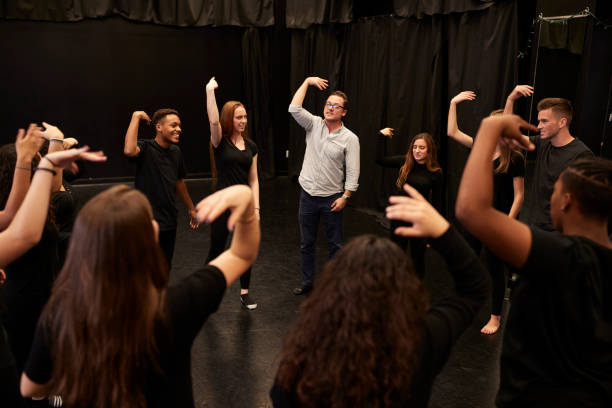
Improving Communication Skills to Elevate Stage and Screen Presence
Effective communication is the cornerstone of any successful actor’s career. Whether you’re performing on stage, in front of a camera, or even at auditions, your ability to communicate convincingly can define the impact of your performance. Professional acting classes are designed not only to enhance your expressive abilities but also to refine how you convey emotions and ideas through dialogue, body language, and non-verbal cues.
The Role of Communication in Acting
- Delivering Authentic Performances: Clear articulation combined with intentional non-verbal expressions ensures your performance resonates with audiences.
- Building Chemistry Among Cast Members: Effective communication fosters trust and connection between co-stars.
- Improving Script Interpretation: Understanding both verbal and subtextual elements ensures you stay true to the character’s essence.
Techniques for Improving Communication Skills
- Focus on projection, clarity, pitch control, and enunciation.
-
Learn breathing exercises to support vocal strength and reduce strain.
- Understand how posture, gestures, and movement influence character portrayal.
-
Practice mirror exercises to observe physical expressions more closely.
- Train yourself to fully listen during scenes rather than waiting for your turn to speak.
-
This helps create organic interactions with scene partners.
- Engage in improv activities that require quick thinking and fluid dialogue delivery.
- Develop spontaneity while staying focused on character goals.
Benefits of Sharpening Communication Skills
| Benefit | Description |
|---|---|
| Enhanced Stage Presence | Improved confidence allows performers to command attention effortlessly. |
| Stronger Emotional Resonance | Clearer delivery helps portray intense emotions authentically without overacting. |
| Career Versatility | Actors who communicate effectively can adapt seamlessly between roles or genres. |
Practical Applications Beyond Acting
- In networking situations: Articulating ideas persuasively can open doors within the entertainment industry.
- During auditions: Confidence in speech delivery leaves lasting impressions on casting directors.
- In personal growth: Enhanced interpersonal skills foster meaningful connections outside professional settings.
By dedicating time to improving communication as an actor—through deliberate practice or under expert guidance—you elevate both stage presence and storytelling capabilities while leaving a memorable impact on audiences everywhere.
Collaborating with Fellow Actors to Foster Creativity and Teamwork
Collaboration is a vital aspect of acting, as it involves collective efforts to create authentic and compelling performances. Whether you’re on stage or in front of the camera, the ability to work seamlessly with fellow actors can significantly enhance your performance. Professional acting classes often emphasize group work, helping aspiring actors develop the skills necessary for effective collaboration.
Why Collaboration Matters in Acting
- Improved Creativity: Collaborating with others introduces fresh perspectives and ideas, allowing you to explore new dimensions of your character.
- Stronger Performances: Genuine reactions and emotions often stem from real-time engagement with fellow actors.
- Problem-Solving: Working closely with others can help identify creative solutions to challenges within scenes or productions.
- Team Dynamics: Understanding how to function as part of an ensemble strengthens trust and respect among cast members.
Key Collaboration Skills for Actors
| Skill | Description |
|---|---|
| Active Listening | Paying close attention to your scene partner’s words, tone, and movements. |
| Adaptability | Being flexible in responding to changes during rehearsals or performances. |
| Empathy | Understanding your partner’s perspective to build authentic connections. |
| Communication | Clearly expressing ideas while respecting others’ contributions. |
Exercises to Build Collaborative Skills
-
Activities like “Yes, And” encourage participants to build on each other’s ideas without hesitation or judgment.
-
Partner activities such as trust falls or leading a blindfolded partner across a space help build confidence in each other.
-
Group rehearsals that focus on ensemble storytelling rather than individual performances allow actors to learn synergy.
- Constructive critique sessions where peers provide input help actors understand how their work affects others.
Benefits of Collaboration in Acting Classes
- Develops strong interpersonal skills valuable both on and off set.
- Encourages mutual growth by learning from each other’s strengths.
- Mimics real-world scenarios where teamwork between cast members is essential for success.
- Builds long-lasting professional relationships within the acting community.
Acting is as much about relationships as it is about personal skill development. By mastering collaborative techniques through professional training, performers can ensure they are not only versatile individuals but also valuable team players capable of elevating any production they join.
- NYC Acting Classes: Improv Techniques for Confidence, Connection, and Emotional Growth
- Top Acting Schools in New York: Your Path to Opportunities in TV, Film, and Commercials
- Top Acting Classes NYC: Elevate Your Skills with Paramount Techniques
- The Performer’s Academy: Your Guide to the Best Acting Classes New York Has to Offer
- Master Your Craft at Top Acting Schools in New York
- What to Consider When Choosing the Best Acting Classes New York Has to Offer
- How to Choose the Best Acting Classes New York Has to Offer for Your Growth as an Actor
- 6 Essential Tips for Success and Believing in Yourself Through Acting Classes NYC
- The Ultimate Beginners Guide to Acting Classes NYC: Tips to Boost Your Skills